
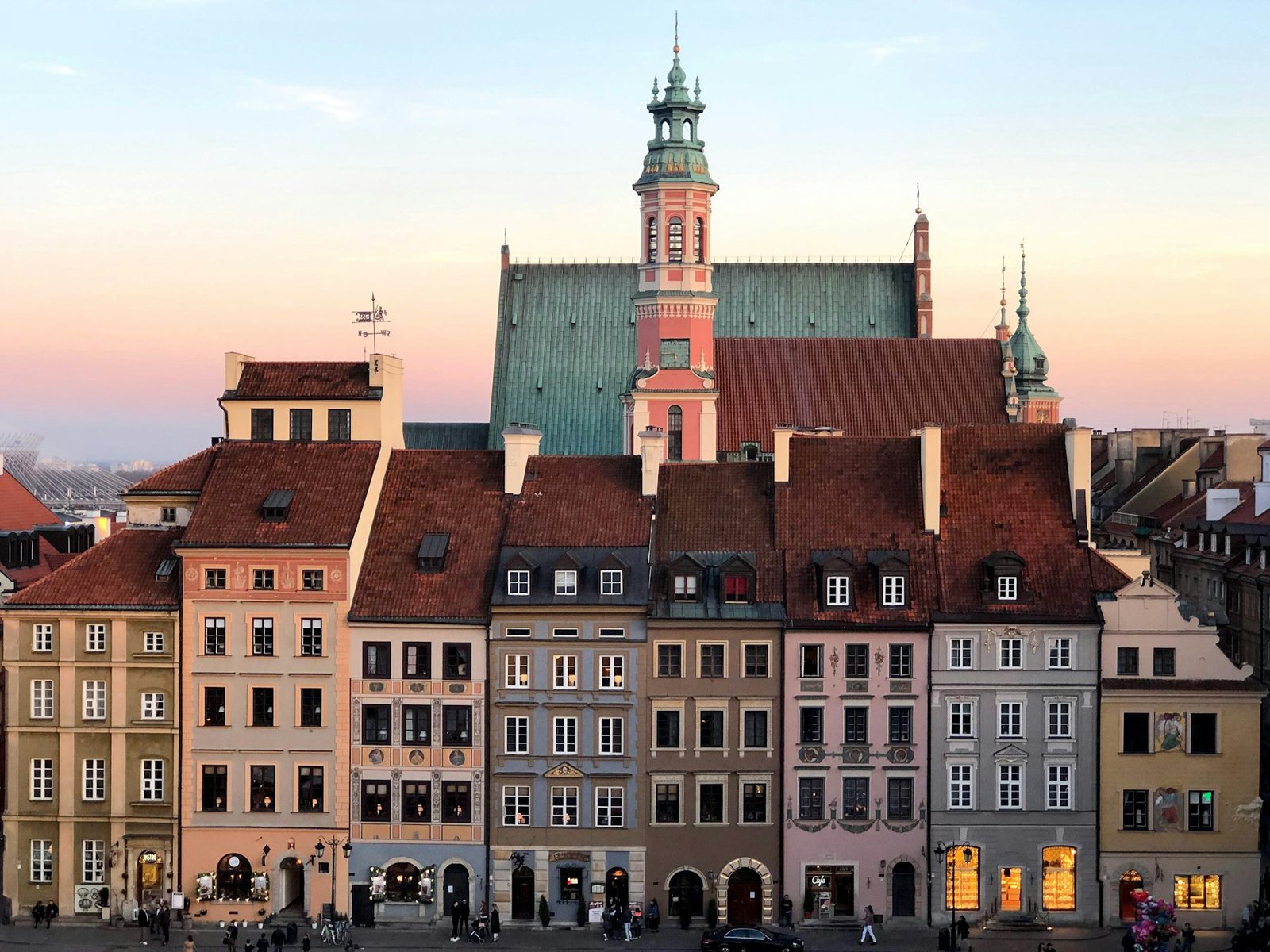
Study in Europe / Poland
The best all-round value in Europe.
Poland offers 900+ English-taught programmes across medicine, engineering, business, and IT, lower living costs than Western Europe, and no restriction on how many hours students can work while enrolled.
Guidance only, not legal advice. Not an immigration lawyer or agent. Learn more →
Why Poland works for almost any field
Breadth, affordability, and unrestricted work rights.
Unlike Romania and Bulgaria, which are primarily medical destinations, Poland offers genuine breadth. Engineering, computer science, business, and medicine are all realistic options with strong English-medium programmes. The unrestricted work rights for enrolled students are unusually generous compared to most of Europe, giving families a genuine way to offset living costs.
Best student cities
Warsaw — capital, most opportunities, higher living costs
Kraków — strong university town, more affordable
Wrocław, Gdańsk, Poznań — growing international student populations
The honest trade-offs
Poland is popular and growing fast, which means competitive intakes at the best-known universities. Scholarships exist through NAWA and Erasmus+ but are limited, so most families should budget for full tuition rather than counting on a waiver.
Key facts
Tuition: €2,000–6,000/year (medicine higher, up to €12,000+)
Living costs: €300–600/month
Proof of funds: approximately PLN 8,000 (~€1,850)
Work rights: no hour restriction for full-time students
English programmes: 900+
What a year actually costs
The number that matters is tuition plus living, not tuition alone.
Families almost always budget for tuition and then get caught out by the rest. Here is the realistic full picture for a student arriving in Poland, based on how students actually live rather than a best-case brochure figure.
Tuition, most fields: €2,000–€6,000 a year for engineering, IT, business and humanities
Tuition, medicine and dentistry: €10,000–€15,000 a year — still well below private seats in South Asia
University dormitory: €100–€200 a month, and by far the cheapest way to live in year one
Private room or shared flat: €250–€400 a month depending on the city
Food and household: €150–€250 a month cooking mostly at home
Transport: €10–€20 a month with a student card — Polish student discounts are genuinely generous
Health insurance: €50–€80 a month privately, or through the NFZ public scheme once enrolled
A realistic all-in year
Outside medicine, most students land between €6,000 and €10,000 for a full year including tuition. Medicine runs closer to €15,000–€20,000 all in. Warsaw sits at the top of those ranges; Kraków, Wrocław, Gdańsk and Poznań sit comfortably below.
Figures are indicative ranges to help you plan, not quotes. Tuition is set per programme and living costs move — confirm both with the university and at application time.
The student visa, step by step
Where applications actually fail.
The Polish student route is not complicated, but it is unforgiving about evidence. Almost every refusal we see comes down to funds or accommodation, not academics.
Secure the admission letter. Apply directly to the university. Most Polish institutions admit on academic record rather than an entrance exam, and many run rolling intakes.
Pay the first tuition instalment. The consulate will want evidence the course is actually paid for, not merely offered.
Prove you can support yourself. Poland asks for evidence of funds covering your stay — budget on roughly PLN 8,000 or more, held in your own account and seasoned, not deposited the week before.
Arrange health insurance. Private cover for arrival, then the public NFZ scheme once you are enrolled and registered.
Confirm accommodation. A dormitory place or a signed rental agreement. This is a common gap in otherwise strong applications.
Apply for the national D visa. At the Polish consulate covering your region. Processing commonly runs 15–30 days, but apply far earlier — consulate appointment slots, not processing, are usually the real bottleneck.
Register after arrival. Apply for a temporary residence card once in Poland if your stay runs beyond the visa period.
The mistake that costs people a year
Leaving the consulate appointment until the admission letter arrives. In peak season, slots in South Asian consulates can be booked out for weeks. Track appointment availability in parallel with your application, not after it.
After you graduate
A degree that does not end at the border.
Poland allows graduates to stay on and look for work rather than requiring an immediate departure, and its IT, engineering and shared-services sectors have been hiring internationally for years. For graduates who find qualifying employment, the EU Blue Card route opens up — and time spent legally resident counts toward longer-term status.
That matters more than it sounds. A degree is a three-to-six year commitment; whether the country lets you build on it afterwards is often what separates a good decision from an expensive one.
Poland suits you if
You want breadth beyond medicine — engineering, IT and business are genuinely strong here
You need to work alongside study, and want no cap on hours
You want EU-recognised qualifications at a cost that does not require selling property
Look elsewhere if
You are counting on a scholarship — NAWA and Erasmus+ exist but are limited and competitive
You want to study in English outside the major cities, where programme choice thins out quickly
You need a large, established diaspora community from day one — Germany and the UK are further ahead on that
Compare with
Other countries worth putting on your list.
Study in Romania
Recognised medical degrees with merit-based admission and no entrance exam.
Does Poland’s flexibility suit your child?
Book your €25 Country-Fit Assessment Call to see whether Poland’s breadth across fields is the right fit. Credited in full toward any guidance package.